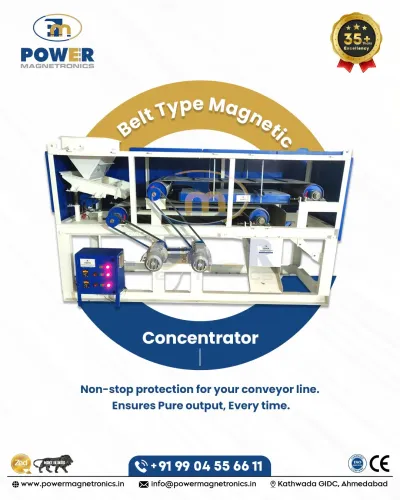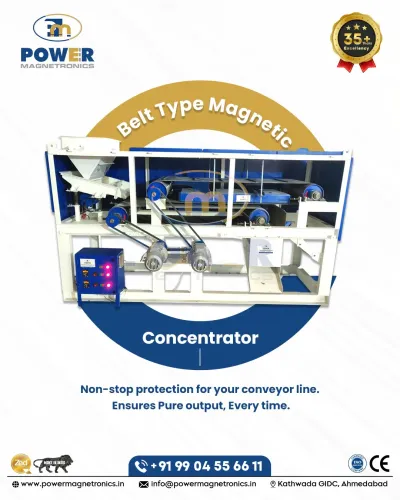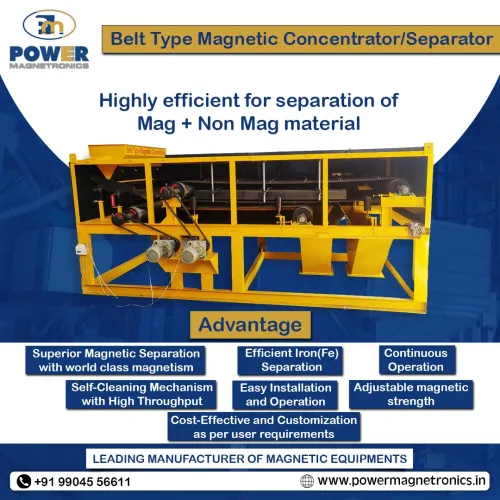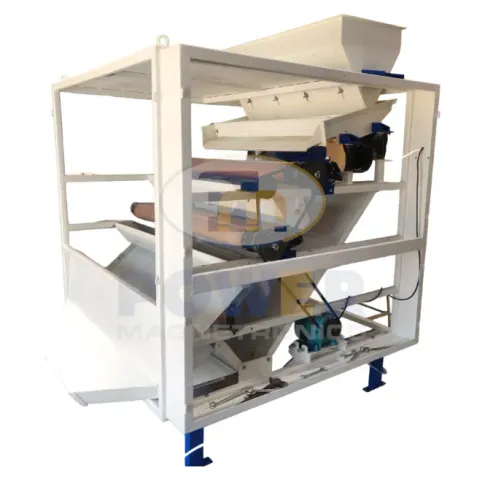
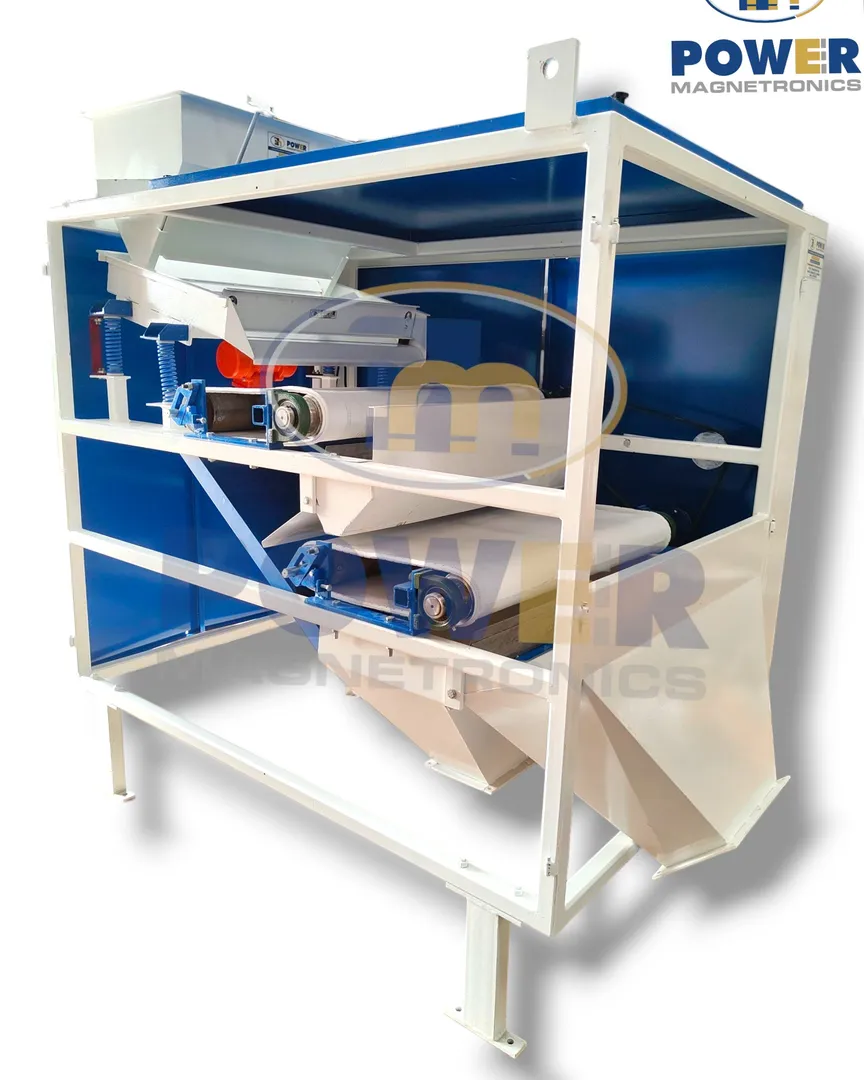
The working principle is based on the difference in magnetic response between particles.
A typical process can be described in the following stages:
1. Controlled Material Feeding
The mineral feed is introduced using a suitable feeding arrangement.
Uniform feeding is important because uneven material distribution can produce inconsistent separation.
2. Material Layer Formation
The material should ideally be presented to the magnetic roller in a controlled layer.
If the material layer is excessively thick, particles underneath the surface may have reduced exposure to the magnetic field.
3. Magnetic Field Interaction
As the material approaches the magnetic roller, magnetic particles experience attraction.
The response depends on the particle's magnetic susceptibility and its position relative to the magnetic field.
4. Different Particle Trajectories
Magnetic and non-magnetic particles follow different trajectories as they leave the separation zone.
5. Splitter Adjustment
An adjustable splitter divides the material into separate fractions.
The splitter position can be optimized according to whether the primary objective is maximum product purity, maximum magnetic recovery or a balance between both.
6. Collection
The separated fractions are collected independently and can be transferred to the next stage of mineral processing.
Keywords